Menu

Studying Highly Efficient Biological Solar Energy Systems

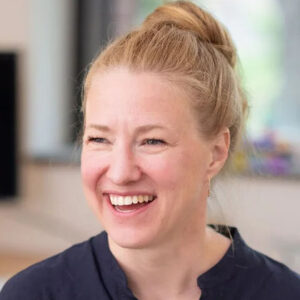
Alison Sweeney uses research computing in her work at the intersection of physics and evolutionary biology, studying marine biophotonic materials.

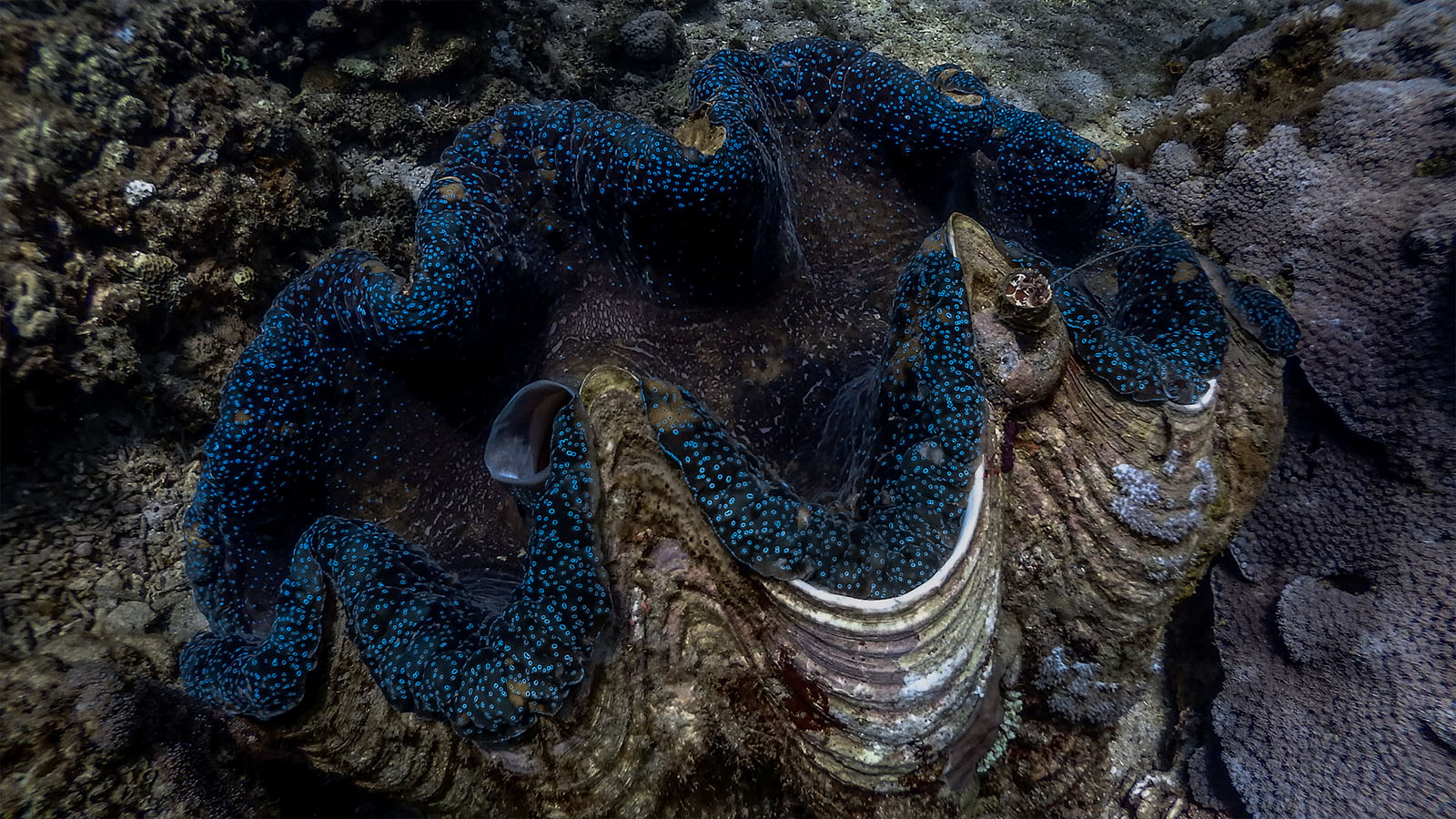
A new Yale-led study reveals that iridescent giant clams near tropical coral reefs may be the most efficient solar energy systems on Earth. These clams use a unique geometry with vertical algae columns and light-scattering cells to maximize sunlight absorption. Researchers developed a model based on clam geometry that showed a quantum efficiency of 67%, much higher than typical plant systems. The study suggests that understanding biological mechanisms like those in giant clams could inspire more efficient solar panel designs and sustainable energy technologies.

Alison Sweeney
Associate Professor of Ecology and Evolutionary Biology and of Physics

Research projects

The US ATLAS Northeast Tier 2 Center
Yale Budget Lab
Volcanic Eruptions Impact on Stratospheric Chemistry & Ozone
Towards a Whole Brain Cellular Atlas
Tornado Path Detection
The Kempner Institute - Unlocking Intelligence
The Institute for Experiential AI
Taming the Energy Appetite of AI Models
Surface Behavior
Studying Highly Efficient Biological Solar Energy Systems
Software for Unreliable Quantum Computers
Simulating Large Biomolecular Assemblies
Revolutionizing Materials Design with Computational Modeling
Quantum Computing in Renewable Energy Development
Pulling Back the Quantum Curtain on ‘Weyl Fermions’
New Insights on Binary Black Holes
Network Attached FPGAs in the OCT
Monte Carlo eXtreme (MCX) - a Physically-Accurate Photon Simulator
Modeling Hydrogels and Elastomers
Modeling Breast Cancer Spread
Impact of Marine Heatwaves on Coral Diversity
IceCube: Hunting Neutrinos
Global Consequences of Warming-Induced Arctic River Changes
Exact Gravitational Lensing by Rotating Black Holes
Evolution of Viral Infectious Disease
Evaluating Health Benefits of Stricter US Air Quality Standards
Ephemeral Stream Water Contributions to US Drainage Networks
Electron Heating in Kinetic-Alfvén-Wave Turbulence
Discovering Evolution’s Master Switches
Dexterous Robotic Hands
Developing Advanced Materials for a Sustainable Energy Future
Detecting Protein Concentrations in Assays
Denser Environments Cultivate Larger Galaxies
Deciphering Alzheimer's Disease
Dancing Frog Genomes
Asteroid Data Mining
Analyzing the Gut Microbiome
Adaptive Deep Learning Systems Towards Edge Intelligence
Accelerating Rendering Power
Computation + Machine Intelligence | Wu Tsai Institute
Computational Modeling of Biological Systems
Social Capital and Economic Mobility
MIT Brain and Cognitive Sciences
Building for Floods
Better Pathogen Targeting
Tracking Environmental Health Risks
AI for Cancer Diagnosis
Microplastic-Free by Design
Supporting Data-intensive Social Science
Sailing the Symbiosis Seascape
Wrangle Range Modeling
Shining a Light on Dark Matter
Grid Responsive Data Centers
Multifunctional 3D-Printed Materials
AI Pareidolia
Computing Hidden Health Threats from Heat
Staving off the Banana Apocalypse
CRISPR Mice, Smarter Science
Naval and Ocean Renewable Energy Hydrodynamics
AI That Speaks Human About Health
A Safer Way to See Inside Cells
How Monkeys - and Machines - See in 3D
FlowER: AI for Predicting Chemical Reactions
Supercomputers Reveal Ancient Atmospheric Battle
OSN - Open Storage Network
Massachusetts AI Hub
MGHPCC AI Computing Resource (AICR)
YARD: A Curation Workflow Tool
All Research Projects

Collaborative projects

ALL Collaborative PROJECTS

OUTREACH & EDUCATION PROJECTS

See ALL Scholarships
100 Bigelow Street, Holyoke, MA 01040