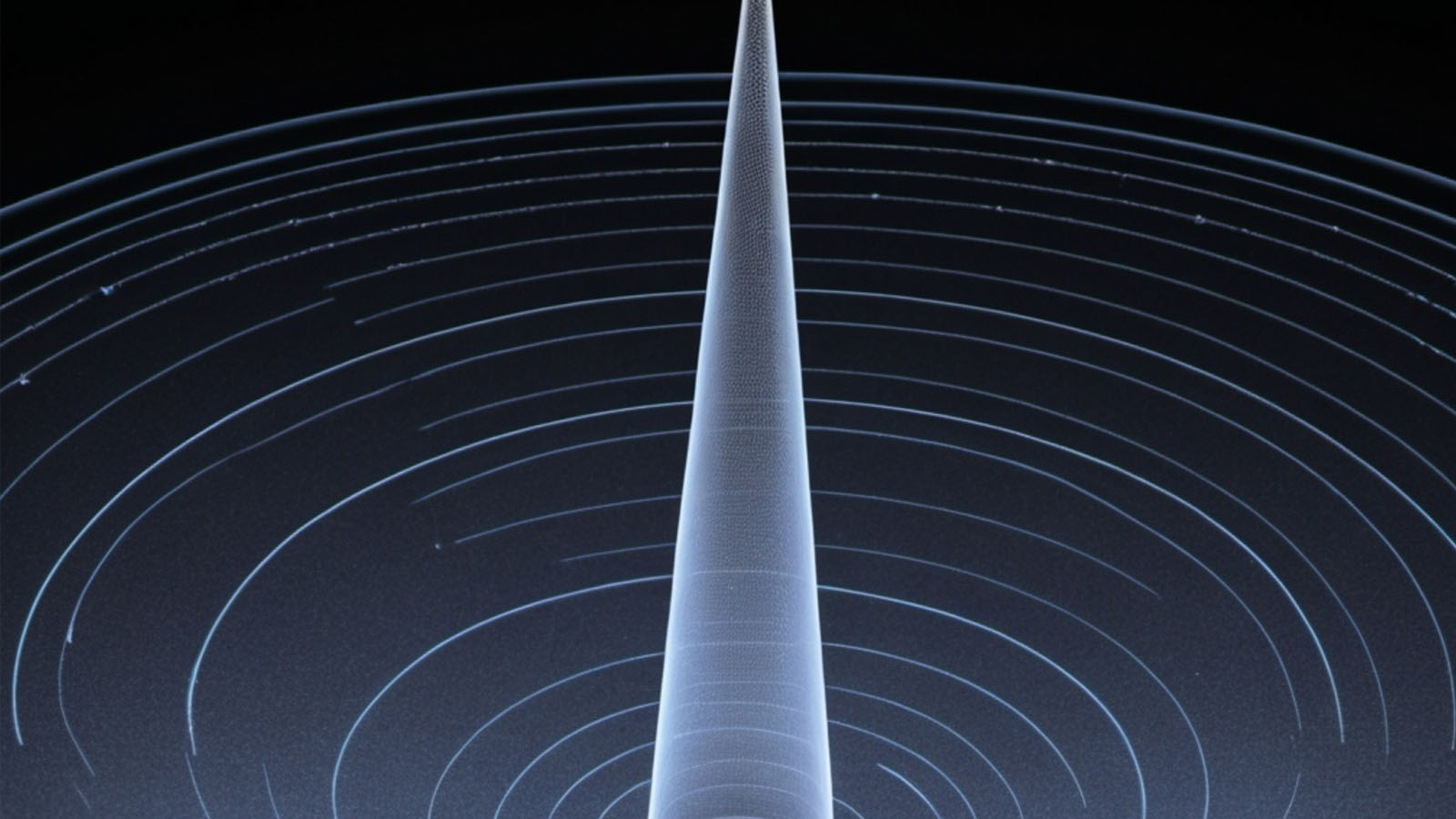
The "spacetime light cone" is a key concept in relativity that helps researchers understand how different events can affect each other. Recently, scientists have found connections between this concept and the study of materials. In these materials, particles can behave like "relativistic particles" in certain conditions.
In the NEU study Chiu et al (2024), NEU scientists explore a concept similar to the spacetime light cone but in the context of energy and momentum. Mapping time to energy and space to momentum, and using something called the "Weyl cone" as an analogy, the authors find that two special types of particles, called Weyl quasiparticles, can only interact in a meaningful way if their energy and momentum are aligned similarly to how events must be aligned within each other’s light cones to affect each other.
Chiu and his colleagues propose a new theoretical framework to explain how these particles, called Weyl fermions, interact with each other in certain materials. The findings, published in Nature Communications, look beyond the framework of Albert Einstein’s theory of relativity to probe these mysterious particles, Chiu says.