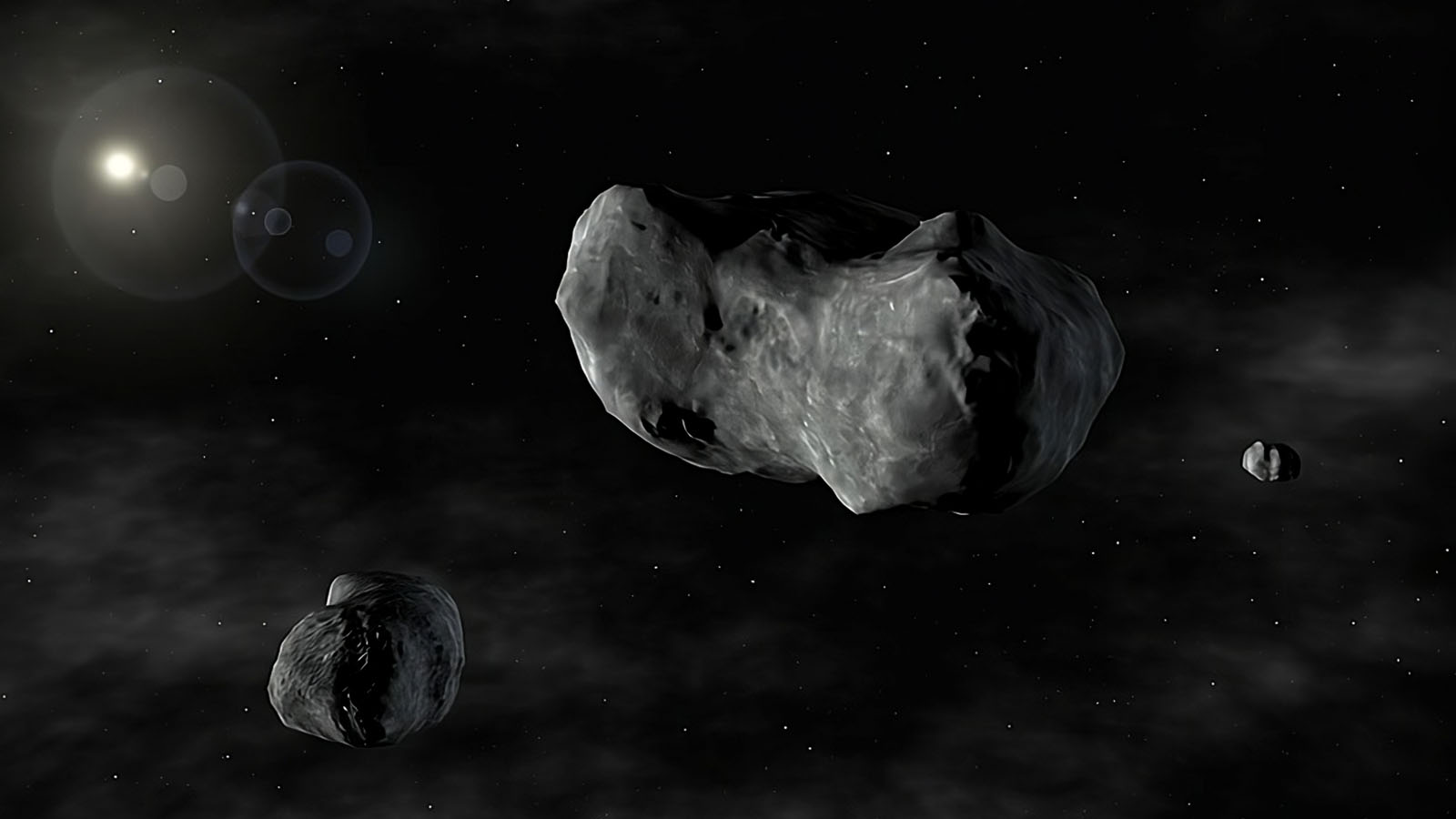
Since asteroid impacts are potentially preventable with the right technology, early detection is essential.
Dr. Nugent and her team are utilizing MGHPCC’s computational resources to reprocess 1 terabyte of sky images from the early 2000s, captured by the Near Earth Asteroid Tracking (NEAT) survey. This effort is uncovering fainter observations and approximately doubling the number of recorded asteroid sightings from this dataset. Additionally, they are developing free software to help small observatories and student groups detect asteroids and comets in their own sky images.
Recent papers include "Reprocessing the NEAT Data Set: Preliminary Results" which introduces a new image analysis pipeline that reprocesses archival data from the Near Earth Asteroid Tracking (NEAT) survey to detect fainter asteroids and improve astrometric and photometric accuracy, marking the first large-scale reanalysis of an asteroid discovery survey and "FindPOTATOs: Minor Planet Observation Linking Software" which introduces a Python-based tool that efficiently links minor planet detections into tracklets using Ball Tree algorithms, enabling accurate identification of near-Earth and trans-Neptunian objects in noisy or archival data sets, especially from small observatories.